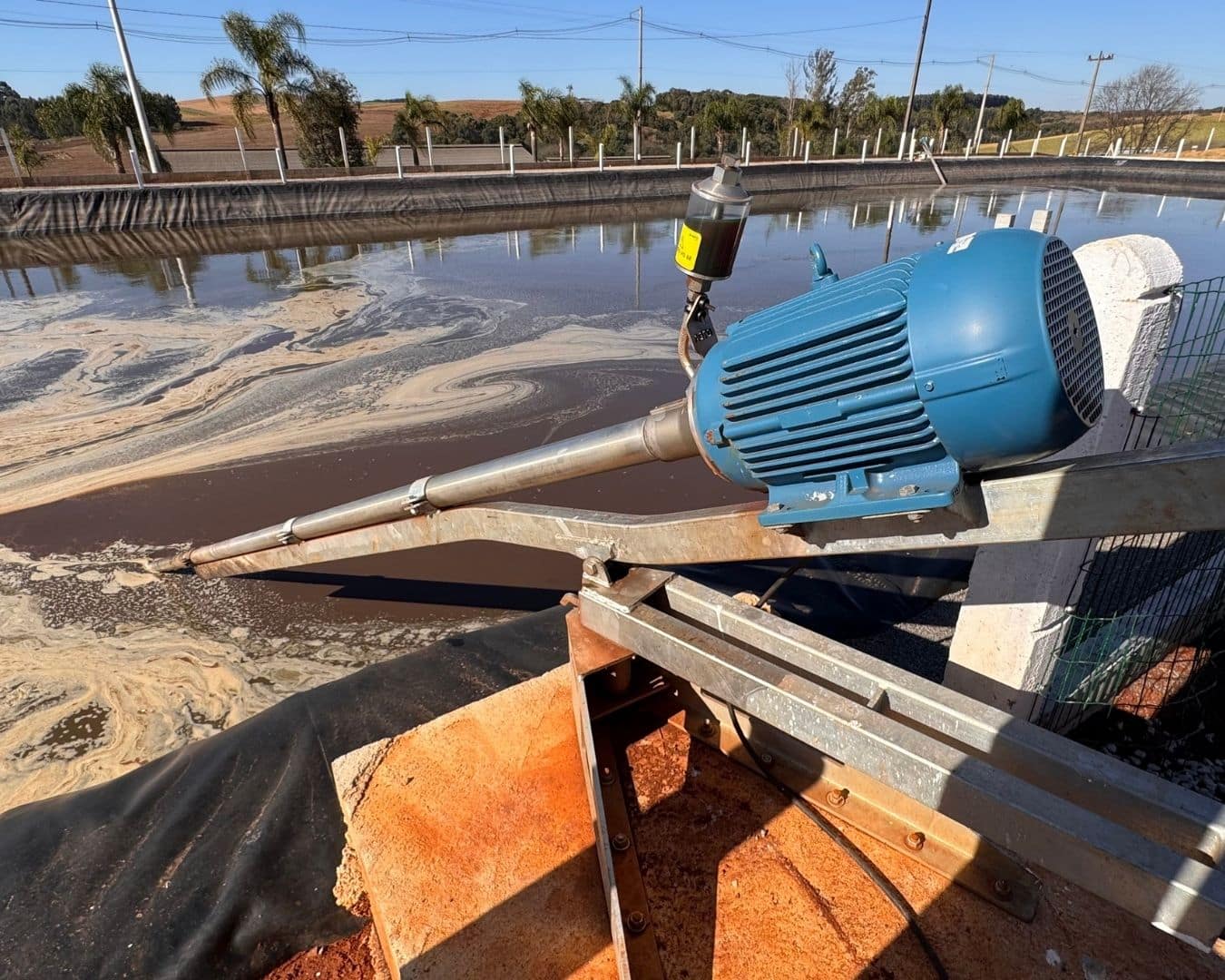
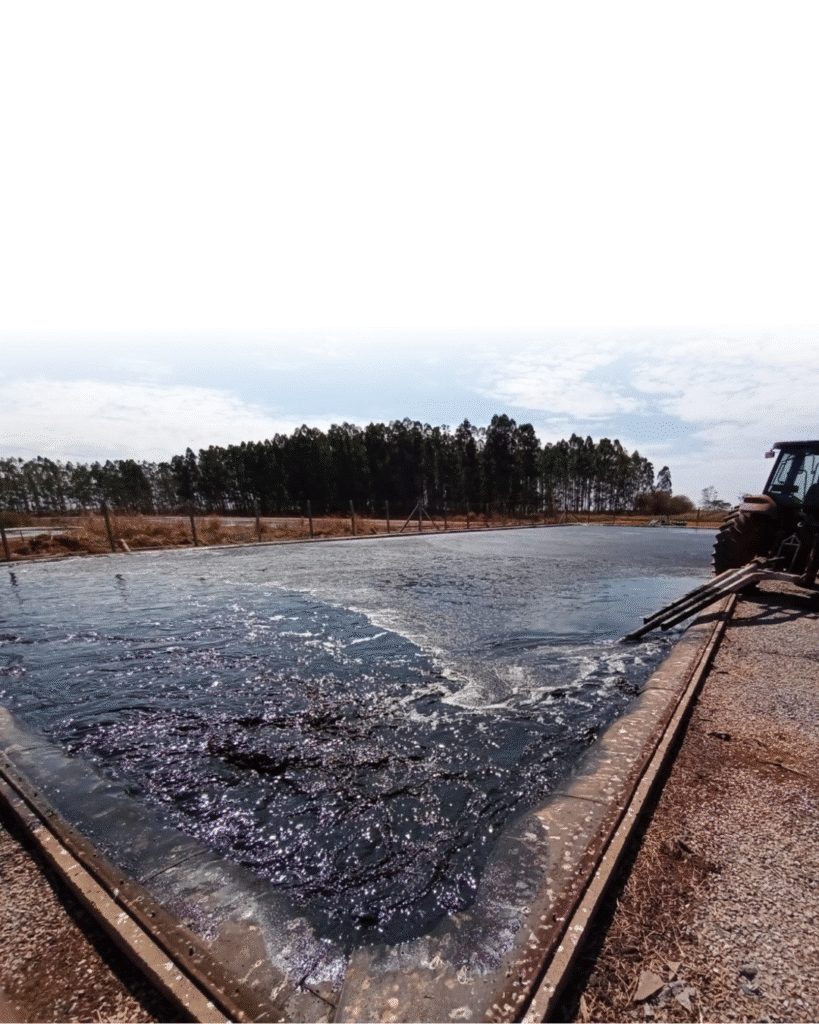
Manure management is one of the most sensitive areas of dairy farming. When done correctly, it reduces costs, improves production efficiency, and contributes to the sustainability of the farm. However, when performed without technical criteria, it leads to rework, waste, and environmental risks.
In practice, many recurring problems on farms are not linked to a lack of technology, but rather to... management errors that accumulate over timeIdentifying these issues is the first step in correcting the system and avoiding operational and environmental losses.
1. Underestimating the actual volume of waste generated.
A common mistake is to consider only the number of animals when estimating waste generation. In dairy farming, the final volume also includes:
-
Water used in milking
-
Cleaning the facilities
-
Milk room effluents
When this additional volume is not factored into the calculation, the system begins to operate above capacity, increasing the risk of overflow and reducing handling efficiency.
2. Poorly sized ponds or ponds lacking a safety margin.
Undersized lagoons constantly operate at their limit. A single period of rain or a temporary increase in production is enough to cause the system to collapse.
The main impacts of this error are:
-
Reducing retention time
-
Difficulty in homogenization
-
Higher concentration of solids
-
Increased environmental risk
Proper sizing needs to consider not only the current reality, but also the future growth of the property.
3. Lack of homogenization of waste.
The absence of proper homogenization is one of the errors that most compromise handling.
Without efficient agitation:
-
The solids accumulate at the bottom of the lagoon.
-
The concentration of nutrients varies over time.
-
Fertigation becomes irregular.
-
Agronomic efficiency decreases
This problem is often only noticed when blockages, excessive odors, or application failures occur.
4. Irregular handling and excessive reliance on people.
When handling relies exclusively on manual routines, it becomes vulnerable to labor availability and variations in task execution.
This results in:
-
Lack of standardization
-
Operations performed outside of the ideal timeframe.
-
Accumulation of pending steps
-
Increased risk of operational failures.
In properties with lean teams, this mistake tends to worsen over time.
5. Incorrect application of waste to the soil.
Even with proper storage, application to the soil can compromise the entire system if not well controlled.
The most common mistakes include:
-
Application without prior homogenization.
-
Excess volume in specific areas
-
Lack of agronomic criteria
-
Disregard weather conditions
These failures reduce nutrient uptake and increase environmental risks.
6. Ignoring the separation of solids when it is necessary.
In many dairy farms, the volume of solids generated justifies the adoption of separation. Ignoring this step can result in:
-
Overburdened lagoons
-
Greater difficulty in agitation
-
Lower efficiency in fertigation
-
Increase in indirect costs
Separating solids is not mandatory in all cases, but when necessary and ignored, the system quickly loses efficiency.
7. Lack of planning for business growth.
Another recurring mistake is structuring management solely for the current reality of the farm. Dairy farming is dynamic, and changes in the herd or production system directly impact waste generation.
Without planning:
-
Systems become obsolete quickly.
-
Adaptations become more expensive and complex.
-
Management practices are beginning to limit production growth.
How to avoid these mistakes in waste management.
Avoiding errors in waste management relies on three fundamental pillars:
-
Technical planning, with correct sizing
-
Standardized processes, which reduce dependence on people
-
Appropriate technology, integrated into the reality of the property
When the system is designed in an integrated way, management ceases to be an operational problem and becomes a tool for efficiency.
Proper management is the foundation for productivity and sustainability.
In dairy farming, manure management directly influences:
-
The efficiency of fertigation
-
Environmental control
-
Organizing the routine
-
Reducing operational costs
Correcting common errors is one of the quickest ways to improve system performance, often without major structural changes.
Conclusion
Errors in manure management in dairy farming often arise from isolated decisions, lack of planning, or absence of technical criteria. Over time, these errors accumulate and impact productivity, costs, and the environmental safety of the farm.
Identifying and correcting these issues is essential to ensure efficient, sustainable, and future-proof management.
💬 Do you want to assess whether your farm's waste management is working correctly?
Speak to the AGTO technical team and request a personalized technical analysis.