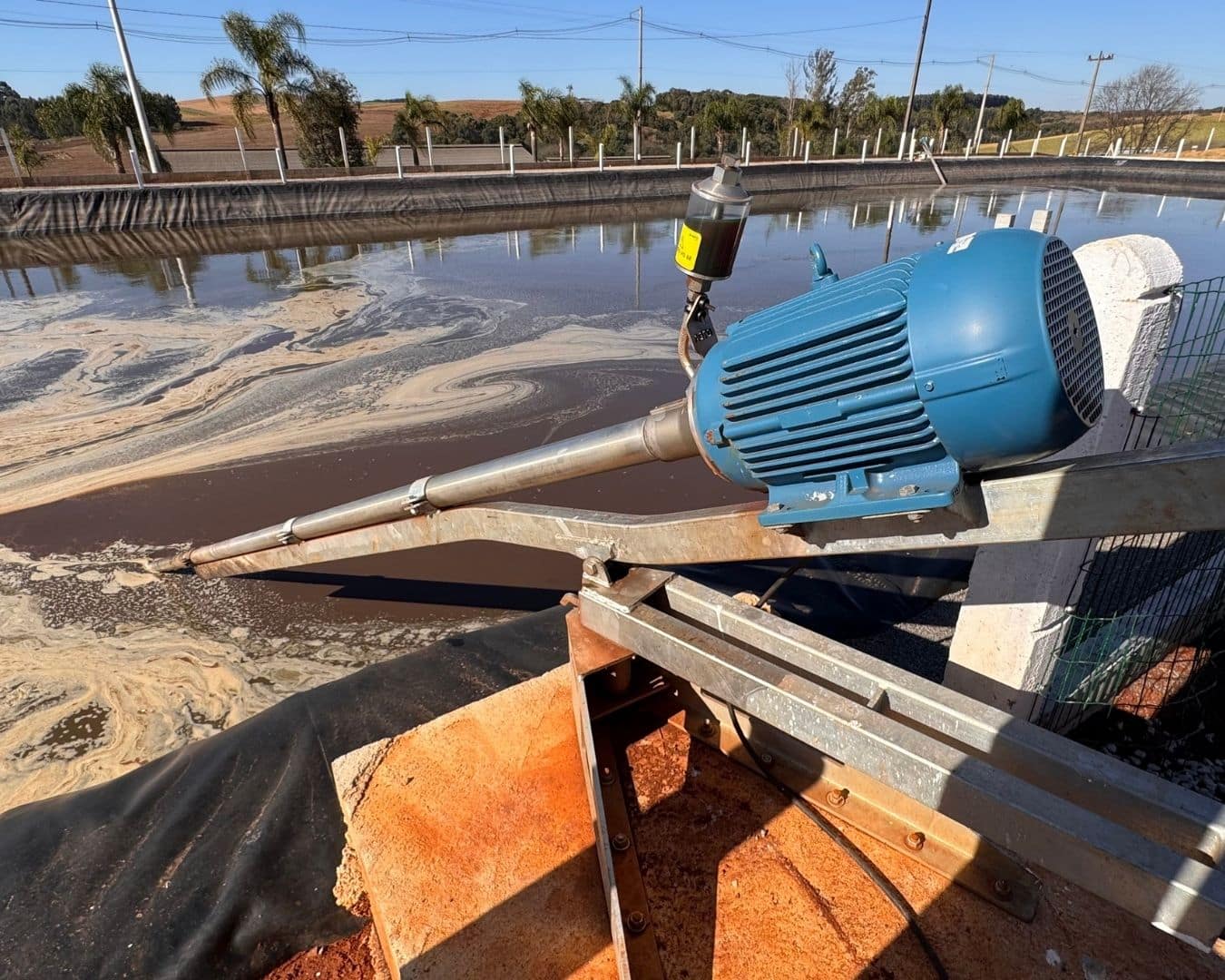
In dairy farming, many costs don't appear directly in the cash flow. They accumulate daily through rework, operational failures, wasted resources, and loss of efficiency. Manure management is one of the areas where these costs are most significant. hidden costs The factors that most impact the property's performance are...
When the system is not automated, the producer pays a price that goes far beyond the investment in equipment. They pay with time, risk, team burnout, and loss of productive potential.
The hidden costs of manual waste handling.
Manual or poorly structured waste management often seems "cheaper" at first glance. However, in practice, it generates a series of indirect costs that are repeated daily.
Among the main ones are:
-
Constant dependence on others to perform critical tasks.
-
Rework caused by routine errors.
-
Unexpected stoppages due to blockages or solid buildup.
-
Loss of efficiency in fertigation
-
High environmental risk
These costs don't appear on a specific invoice, but they directly affect the profitability of the business.
Rework: the biggest cost in everyday life.
One of the biggest impacts of not automating waste management is rework.
When the routine depends on manual execution:
-
Homogenization doesn't always happen at the right time.
-
Steps are completed outside of the ideal timeframe.
-
Problems need to be corrected later, with more effort.
In practice, this means redoing tasks that could have been done correctly from the start. Rework consumes team time, increases operational strain, and compromises the system's regularity.
Loss of efficiency in fertigation
Fertigation is one of the greatest benefits of using manure in dairy farming. However, it only works well when the management is technical and predictable.
Without automation, the following commonly occurs:
-
Irregular application of nutrients
-
Variation in the concentration of the applied material
-
Waste of the fertilizing potential of manure.
As a result, the producer loses part of the agronomic value of the residue and often needs to supplement fertilization with external inputs, increasing production costs.
Operational costs that accumulate over time.
Another critical point is the accumulation of operational costs over months and years.
Non-automated systems tend to:
-
Demanding more working hours
-
Require frequent interventions
-
Always operate at the limit.
-
To exhibit greater wear and tear on the components.
These factors increase maintenance costs, raise the risk of failures, and reduce the lifespan of the system as a whole.
Environmental risk also has a cost.
When waste management is not automated, system control becomes more vulnerable. This increases the risk of:
-
Excessive accumulation of solids
-
Strong odor
-
Overflows during critical periods
-
Improper application to the soil
In addition to the environmental impact, these problems can generate legal costs, the need for emergency adjustments, and damage to the property's image.
Automation as a means of reducing losses, not just an investment.
Automating waste management should not be seen merely as a cost or investment in technology. In practice, it is about... reduce ongoing losses that occur every day in manual systems.
With automation, the producer gains:
-
Standardized processes
-
Operational regularity
-
Less dependence on people
-
More predictability in management.
-
Better use of waste.
The system then operates consistently, delivering the same results every day, regardless of variations in the team or routine.
The economic impact over time
When you put everything down on paper — rework, wasted nutrients, operational failures, and environmental risks — the cost of not automating proves to be high.
In many cases, the value lost over one or two years is greater than the investment needed to properly structure waste management.
Therefore, more and more producers are viewing automation not as a differentiator, but as a necessity. strategic decision to protect the business.
Conclusion
In dairy farming, not automating manure management is costly—even if that cost isn't explicitly stated. It manifests in daily rework, loss of efficiency, operational risks, and wasted productive potential.
Automation reduces losses, increases control, and prepares the property for a scenario of increasingly lean teams and more stringent technical requirements.
Do you want to understand how much your current farm management practices might be costing you without you realizing it?
Speak to the AGTO technical team and request an analysis of your system.