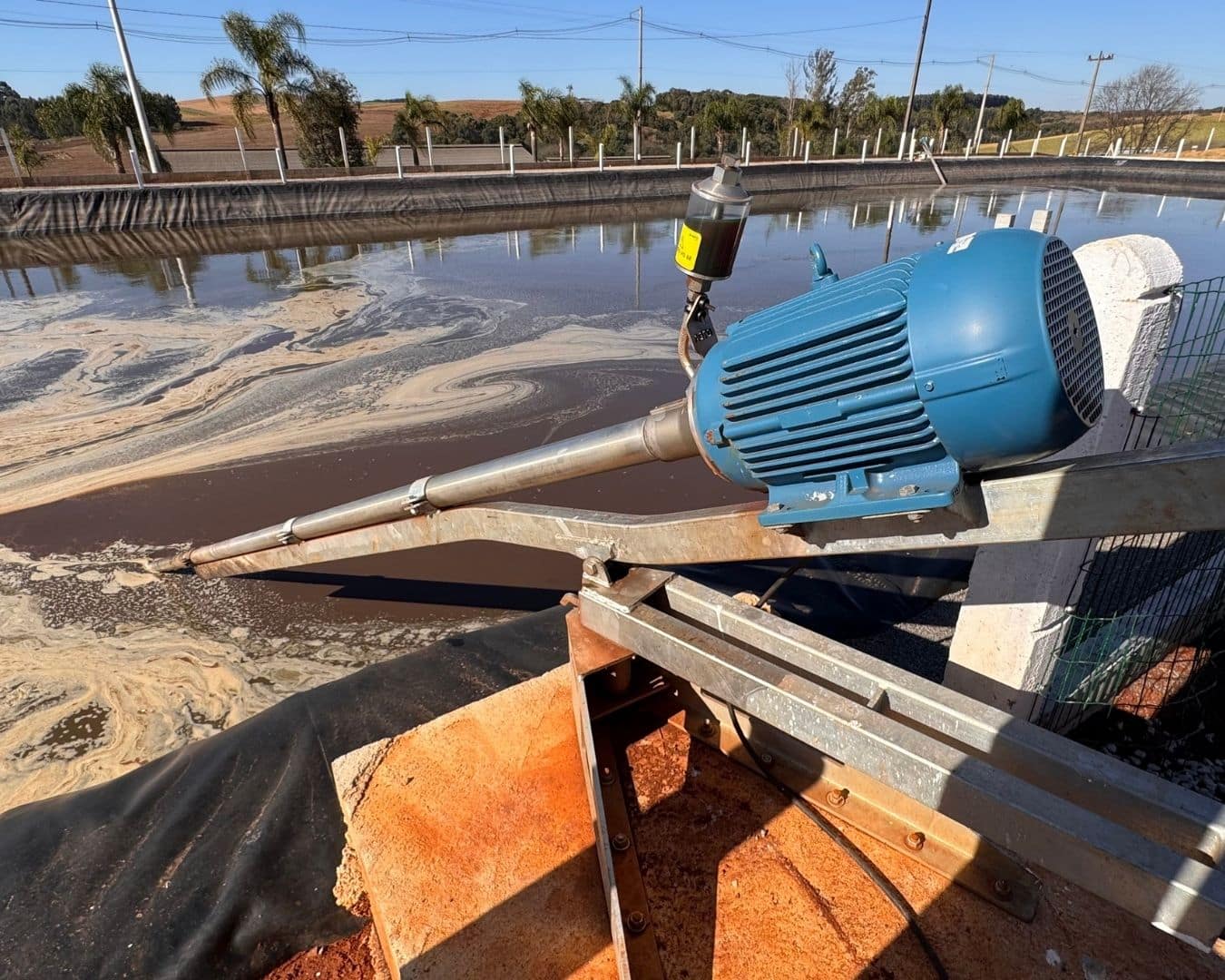
In dairy farming, manure agitation is an essential step in management. However, the way this agitation is carried out makes all the difference in the system's outcome. Many farms still work with... punctual agitation, done only at specific times, while others have already adopted the continuous agitation, integrated into the management routine.
Understanding the difference between these two models is fundamental to avoiding operational failures, nutrient waste, and problems in fertigation.
What is the punctual agitation of waste?
Occasional agitation occurs when the manure lagoon is only moved in specific situations, such as before fertigation or when visible problems arise, for example:
-
excessive accumulation of solids
-
pumping difficulty
-
more intense odors
In this model, the lagoon remains without adequate movement for long periods, allowing for the natural separation between solids and liquids.
Main characteristics of point agitation
-
Sporadic operation
-
Dependence on human intervention
-
Variable result
-
Greater risk of failure
In practice, this is a reactive approach, responding to problems after they have already arisen.
Limitations of point agitation in manure management.
Although common, point agitation brings important limitations, especially in larger volume systems.
Among the main impacts are:
-
Formation of layers of solids at the bottom of the lagoon.
-
Reduction in usable storage volume
-
Variation in nutrient concentration
-
Difficulty in maintaining regular fertigation.
-
Increased risk of blockages
Over time, the lagoon begins to operate erratically, requiring frequent repairs and increasing wear and tear on the system.
What is the continuous agitation of excrement?
Continuous agitation is a model in which the lagoon remains in regular and controlled motion, regardless of when the waste is applied to the soil.
In this system, homogenization ceases to be a one-off action and becomes part of the farm's technical routine.
Main characteristics of continuous agitation
-
Regular and standardized operation
-
Always homogeneous lagoon
-
Reduced reliance on corrective actions.
-
Greater system predictability
Continuous agitation transforms handling into a preventive, rather than a corrective, process.
Practical differences between point agitation and continuous agitation.
In the day-to-day running of the farm, the difference between the two models is clear.
With occasional agitation:
-
The result depends on the timing of the operation.
-
Fertigation presents variations
-
Nutrients are not distributed evenly.
-
The system requires more attention and corrections.
With continuous agitation:
-
The solids remain in suspension.
-
The composition of the waste is more stable.
-
Fertigation becomes predictable.
-
Management gains operational efficiency.
This difference directly impacts the utilization of waste and the safety of the system.
Impacts on fertigation and nutrient utilization
Fertigation requires regularity. When the pond is poorly homogenized, application to the soil becomes irregular.
With continuous agitation:
-
the concentration of nutrients remains more constant.
-
The producer applies the material more evenly.
-
The fertilizing potential of manure is better utilized.
In the case of occasional agitation, a significant portion of the nutrients can remain accumulated at the bottom of the pond, without being properly utilized.
Relationship between continuous agitation and operational safety.
In addition to increased production efficiency, continuous agitation contributes to the safety of manure handling.
Among the main benefits are:
-
lower risk of blockages
-
odor reduction
-
lower chance of transshipment
-
better environmental control
This makes it easier to meet legal requirements and reduces risks to the property.
When continuous agitation becomes essential.
In properties with:
-
larger volume of waste
-
frequent fertigation
-
reduced team
-
need for operational predictability
Continuous agitation ceases to be an improvement and becomes a technical necessity.
Agitation as part of the system, not as an isolated task.
A common mistake is treating agitation as a separate task. In reality, it should be integrated into the overall manure management system.
When agitation is continuous and well-proportioned, it:
-
improves fertigation efficiency
-
reduces operational errors
-
increases the system's lifespan
-
It brings more control to the farm's routine.
Conclusion
The difference between point agitation and continuous agitation of manure goes far beyond the frequency of operation. These are two management models with completely different impacts on the efficiency, predictability, and safety of the system.
While punctual agitation acts reactively, continuous agitation organizes management and prepares the property to operate with more control and less risk.
💬 Do you want to understand which agitation model is best suited for your farm?
Speak to the AGTO technical team and request an analysis of your manure management system.
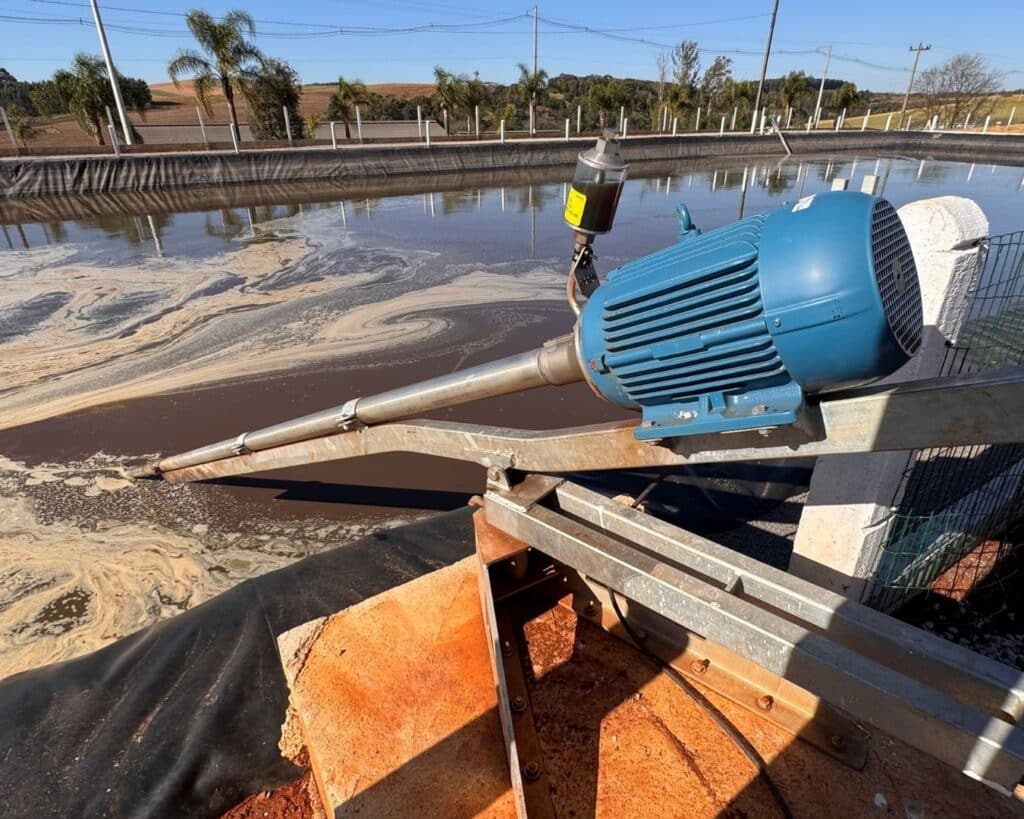
In dairy farming, manure agitation is an essential step in management. However, the way this agitation is carried out makes all the difference in the system's outcome. Many farms still work with... punctual agitation, done only at specific times, while others have already adopted the continuous agitation, integrated into the management routine.
Understanding the difference between these two models is fundamental to avoiding operational failures, nutrient waste, and problems in fertigation.
What is the punctual agitation of waste?
Occasional agitation occurs when the manure lagoon is only moved in specific situations, such as before fertigation or when visible problems arise, for example:
-
excessive accumulation of solids
-
pumping difficulty
-
more intense odors
In this model, the lagoon remains without adequate movement for long periods, allowing for the natural separation between solids and liquids.
Main characteristics of point agitation
-
Sporadic operation
-
Dependence on human intervention
-
Variable result
-
Greater risk of failure
In practice, this is a reactive approach, responding to problems after they have already arisen.
Limitations of point agitation in manure management.
Although common, point agitation brings important limitations, especially in larger volume systems.
Among the main impacts are:
-
Formation of layers of solids at the bottom of the lagoon.
-
Reduction in usable storage volume
-
Variation in nutrient concentration
-
Difficulty in maintaining regular fertigation.
-
Increased risk of blockages
Over time, the lagoon begins to operate erratically, requiring frequent repairs and increasing wear and tear on the system.
What is the continuous agitation of excrement?
Continuous agitation is a model in which the lagoon remains in regular and controlled motion, regardless of when the waste is applied to the soil.
In this system, homogenization ceases to be a one-off action and becomes part of the farm's technical routine.
Main characteristics of continuous agitation
-
Regular and standardized operation
-
Always homogeneous lagoon
-
Reduced reliance on corrective actions.
-
Greater system predictability
Continuous agitation transforms handling into a preventive, rather than a corrective, process.
Practical differences between point agitation and continuous agitation.
In the day-to-day running of the farm, the difference between the two models is clear.
With occasional agitation:
-
The result depends on the timing of the operation.
-
Fertigation presents variations
-
Nutrients are not distributed evenly.
-
The system requires more attention and corrections.
With continuous agitation:
-
The solids remain in suspension.
-
The composition of the waste is more stable.
-
Fertigation becomes predictable.
-
Management gains operational efficiency.
This difference directly impacts the utilization of waste and the safety of the system.
Impacts on fertigation and nutrient utilization
Fertigation requires regularity. When the pond is poorly homogenized, application to the soil becomes irregular.
With continuous agitation:
-
the concentration of nutrients remains more constant.
-
The producer applies the material more evenly.
-
The fertilizing potential of manure is better utilized.
In the case of occasional agitation, a significant portion of the nutrients can remain accumulated at the bottom of the pond, without being properly utilized.
Relationship between continuous agitation and operational safety.
In addition to increased production efficiency, continuous agitation contributes to the safety of manure handling.
Among the main benefits are:
-
lower risk of blockages
-
odor reduction
-
lower chance of transshipment
-
better environmental control
This makes it easier to meet legal requirements and reduces risks to the property.
When continuous agitation becomes essential.
In properties with:
-
larger volume of waste
-
frequent fertigation
-
reduced team
-
need for operational predictability
Continuous agitation ceases to be an improvement and becomes a technical necessity.
Agitation as part of the system, not as an isolated task.
A common mistake is treating agitation as a separate task. In reality, it should be integrated into the overall manure management system.
When agitation is continuous and well-proportioned, it:
-
improves fertigation efficiency
-
reduces operational errors
-
increases the system's lifespan
-
It brings more control to the farm's routine.
Conclusion
The difference between point agitation and continuous agitation of manure goes far beyond the frequency of operation. These are two management models with completely different impacts on the efficiency, predictability, and safety of the system.
While punctual agitation acts reactively, continuous agitation organizes management and prepares the property to operate with more control and less risk.
💬 Do you want to understand which agitation model is best suited for your farm?
Speak to the AGTO technical team and request an analysis of your manure management system.